IT Consultancy
IT Consultancy Get expert guidance to leverage technology for your business growth. We help you identify the right IT solutions, optimize infrastructure, and ensure your digital environment is secure,…
make IT easy


IT Consultancy Get expert guidance to leverage technology for your business growth. We help you identify the right IT solutions, optimize infrastructure, and ensure your digital environment is secure,…
Digital Marketing Grow your brand and reach the right audience with data-driven marketing strategies. We help you create campaigns that convert, manage social channels effectively, and optimize your d…
Privacy Policy At CometSoul, accessible from https://cometsoul.com, one of our main priorities is the privacy of our visitors. This Privacy Policy document contains types of information that is collec…
Welcome to CometSoul! These terms and conditions outline the rules and regulations for the use of CometSoul’s Website, located at https://cometsoul.com. By accessing this website we assume you a…
If you require any more information or have any questions about our site’s disclaimer, please feel free to contact us. Disclaimers for CometSoul All the information on this website – https…

Managed Wi-Fi Service Build a fast, stable, and secure Wi-Fi for your business at Zero depreciation cost. Enterprise-Grade Guest Wi-Fi With $0 Upfront Hardware Costs. We provide, install, and support …

Smart Business System Integrator Simplify your daily operations with smart systems that automate bookings, schedules, and routine tasks so you can focus on growing your business. We set up and integra…
IT Procurement & Hardware Managed Service Keep your technology running smoothly from the hardware you use every day to the systems that power your business. We provide end-to-end IT management so …
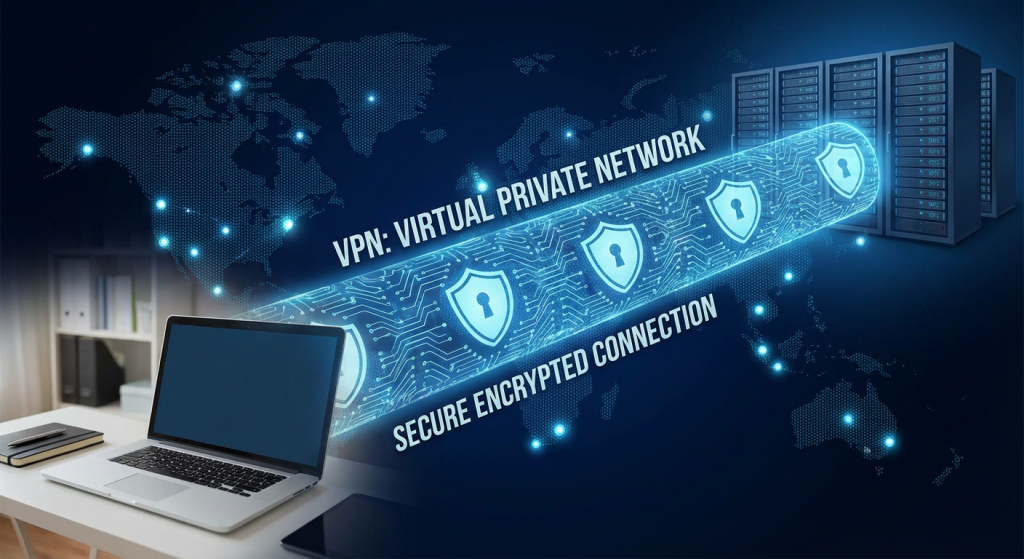
Many people are unsure whether they actually need a VPN. VPN services are everywhere now, often advertised as the best way to stay safe online. But do you really need one? Here’s a simple explanation to help you decide.
A VPN (Virtual Private Network) is a tool that hides your IP address and encrypts your internet traffic. This makes your online activity more private and harder to track.
A VPN hides your real IP address. Websites, apps, and advertisers will have a harder time tracking you.
Using free Wi-Fi in cafés, airports, or hotels can be risky. A VPN encrypts your data so others on the same network cannot spy on you.
A VPN lets you appear as if you are in another country. This helps you access region-locked sites or streaming content.
Your internet provider can usually see what you do online. A VPN hides this information.
A VPN can slow down your internet because data must pass through an extra server.
Streaming platforms, banking apps, and websites may reject VPN connections.
A VPN does not protect you from malware, phishing, or weak passwords.
It only hides your connection, not your mistakes.
Your VPN provider can see your traffic. If they are not trustworthy, your privacy may still be at risk.
You need a VPN if you often use public Wi-Fi, want more privacy, or need access to content in other regions.
You may not need a VPN if you only browse at home, do not access blocked websites, and already practice safe internet habits.
If you want more privacy and security with one easy tool, a VPN can help.
If you expect it to make you 100% anonymous or fully protected, it won’t.