

IT Consultancy
IT Consultancy Get expert guidance to leverage technology for your business growth. We help you identify the right IT solutions, optimize infrastructure, and ensure your digital environment is secure,…

make IT easy
IT Consultancy Get expert guidance to leverage technology for your business growth. We help you identify the right IT solutions, optimize infrastructure, and ensure your digital environment is secure,…
Digital Marketing Grow your brand and reach the right audience with data-driven marketing strategies. We help you create campaigns that convert, manage social channels effectively, and optimize your d…
Privacy Policy At CometSoul, accessible from https://cometsoul.com, one of our main priorities is the privacy of our visitors. This Privacy Policy document contains types of information that is collec…
Welcome to CometSoul! These terms and conditions outline the rules and regulations for the use of CometSoul’s Website, located at https://cometsoul.com. By accessing this website we assume you a…
If you require any more information or have any questions about our site’s disclaimer, please feel free to contact us. Disclaimers for CometSoul All the information on this website – https…

Managed Wi-Fi Service Build a fast, stable, and secure Wi-Fi for your business at Zero depreciation cost. Enterprise-Grade Guest Wi-Fi With $0 Upfront Hardware Costs. We provide, install, and support …

Smart Business System Integrator Simplify your daily operations with smart systems that automate bookings, schedules, and routine tasks so you can focus on growing your business. We set up and integra…

IT Procurement & Hardware Managed Service Keep your technology running smoothly from the hardware you use every day to the systems that power your business. We provide end-to-end IT management so …
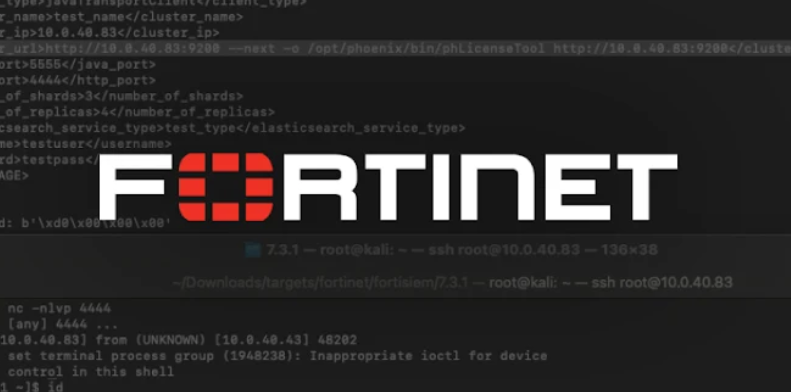
Fortinet has released security updates to fix a critical vulnerability in FortiSIEM that could allow an attacker to execute code remotely without authentication. The flaw is tracked as CVE-2025-64155 and has a CVSS score of 9.4, indicating a very high risk.
According to Fortinet, the issue is an OS command injection vulnerability. An attacker can send specially crafted TCP requests to vulnerable FortiSIEM systems and run unauthorized commands. This vulnerability only affects Super and Worker nodes in on-premise deployments.
The flaw exists in the phMonitor service, a core FortiSIEM component that handles system monitoring and internal communication over TCP port 7900. Due to improper input handling, this service can be abused to write arbitrary files to disk. In a worst-case scenario, attackers can escalate privileges from admin to root, resulting in full takeover of the appliance.
Security researchers from Horizon3.ai confirmed that the vulnerability can be chained into a complete compromise. A proof-of-concept (PoC) exploit has already been released, significantly increasing the risk. In addition, real-world exploitation attempts have been observed targeting exposed systems.
Fortinet has fixed the issue in newer versions and strongly urges administrators to upgrade immediately. As a temporary mitigation, access to port 7900 should be restricted to trusted systems only.
In a related update, Fortinet also patched a critical FortiFone vulnerability (CVE-2025-47855) that could allow attackers to access device configuration without authentication.
With active exploitation already detected, organizations using FortiSIEM are advised to apply patches as soon as possible and review network exposure to reduce the risk of attack.
Source: https://thehackernews.com/2026/01/fortinet-fixes-critical-fortisiem-flaw.html