IT Consultancy
IT Consultancy Get expert guidance to leverage technology for your business growth. We help you identify the right IT solutions, optimize infrastructure, and ensure your digital environment is secure,…
make IT easy


IT Consultancy Get expert guidance to leverage technology for your business growth. We help you identify the right IT solutions, optimize infrastructure, and ensure your digital environment is secure,…
Digital Marketing Grow your brand and reach the right audience with data-driven marketing strategies. We help you create campaigns that convert, manage social channels effectively, and optimize your d…
Privacy Policy At CometSoul, accessible from https://cometsoul.com, one of our main priorities is the privacy of our visitors. This Privacy Policy document contains types of information that is collec…
Welcome to CometSoul! These terms and conditions outline the rules and regulations for the use of CometSoul’s Website, located at https://cometsoul.com. By accessing this website we assume you a…
If you require any more information or have any questions about our site’s disclaimer, please feel free to contact us. Disclaimers for CometSoul All the information on this website – https…

Managed Wi-Fi Service Build a fast, stable, and secure Wi-Fi for your business at Zero depreciation cost. Enterprise-Grade Guest Wi-Fi With $0 Upfront Hardware Costs. We provide, install, and support …

Smart Business System Integrator Simplify your daily operations with smart systems that automate bookings, schedules, and routine tasks so you can focus on growing your business. We set up and integra…

IT Procurement & Hardware Managed Service Keep your technology running smoothly from the hardware you use every day to the systems that power your business. We provide end-to-end IT management so …
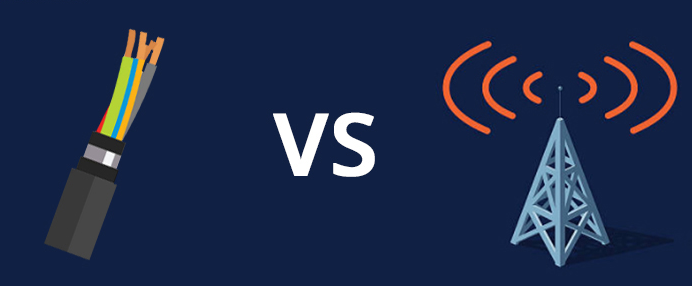
Internet connections are available today in a variety of connection types. The two most common options are fiber optic and wireless . Both can be used to access the internet, but they differ in speed, stability, cost, and coverage.
Fiber optic internet is an internet connection that uses fiber optic cables to transmit data via light signals.
This technology is capable of providing high internet speeds and a more stable connection. Fiber optic is typically used in homes, offices, schools, and businesses that require a fast internet connection.
Wireless internet is an internet connection that sends data without cables via radio waves.
This connection can come from a cellular network, a point-to-point antenna, fixed wireless access, or a modem device with a SIM card. Wireless internet is often used in locations where fiber optic cables are not yet available.
Fiber optic typically offers higher and more consistent speeds. Speeds can range from hundreds of Mbps to several Gbps, depending on the service plan.
Wireless internet can also provide high speeds, but the results are affected by signal quality, distance from the transmitter, weather conditions, and the number of users.
Fiber optic tends to be more stable because data is transmitted through cables. This connection is less affected by radio signal interference.
Wireless internet is more susceptible to speed changes due to signal interference, building obstructions, bad weather, or network congestion.
Fiber optic generally has lower latency. This makes it suitable for:
Wireless internet can have higher latency and be unstable, especially if the signal is weak or the network is busy.
Fiber optic can only be used in areas that already have a cable network from a service provider.
Wireless internet offers more flexible coverage. As long as a location can receive a signal from a tower, base station, or transmitting antenna, an internet connection is possible.
Fiber optic installation requires pulling cables from the service provider’s network to the user’s home or building.
Wireless internet is usually easier to install. Users only need a modem, router, SIM card, or receiving antenna.
Fiber optic is relatively unaffected by rain or weather conditions because it uses cables.
Wireless internet can experience reduced quality during heavy rain, wind, or interference on the signal path, especially on long-distance radio connections.
Fiber optic installation costs can be higher if the location doesn’t already have a cable network. However, the monthly cost is usually commensurate with the speed and stability achieved.
Wireless internet can be a more economical option for remote locations or temporary use. Costs depend on the data plan, device, and technology used.
Fiber optic is more suitable if you need a fast and stable primary connection for home, office, CCTV, servers, online gaming, or streaming.
Wireless internet is more suitable if the location is not yet covered by fiber optic, requires a connection that is easy to move, or is used as a backup internet.
For best results, users can use both. Fiber optic is used as the primary connection, while wireless internet is used as a backup connection in case the primary network experiences problems.
Fiber optic internet excels in speed, stability, and latency. Meanwhile, wireless internet excels in flexibility, ease of installation, and coverage.
The best choice depends on location conditions, user needs, budget, and network availability.